Staff
Academic Staff:

Prof. Martin R. Bryce
(email at m.r.bryce@durham.ac.uk)
Research Interests
The work in my group is rooted in new synthetic organic chemistry. Current general themes include:
- the synthesis of organic molecules and polymers - especially heteroaromatic systems - that possess specifically designed properties, e.g. self-assembly, photo- and electro-luminescence, inter- or intra-molecular charge-transfer, and their applications in molecular electronic and photonic devices;
- the development of new methodology for the synthesis of highly-functionalised nitrogen heterocycles of importance to the pharmaceutical and agrochemicals industries.
Materials for Organics Light-Emitting Devices (OLEDs)
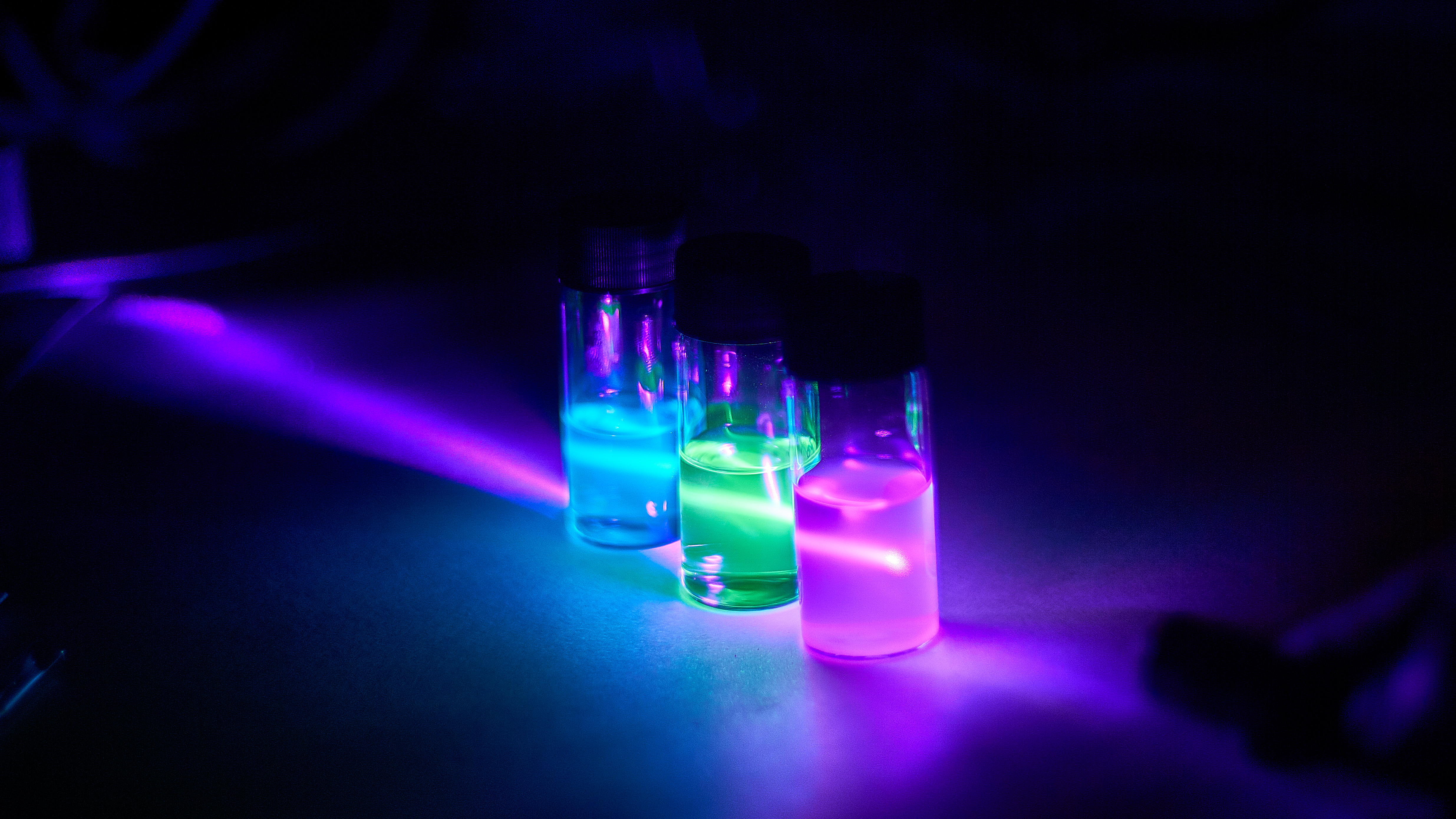
The ability to control the optoelectronic properties of conjugated molecular and polymeric systems is a fascinating issue in the design of new materials for light-emitting devices and displays that offer bright colours and a high degree of resolution. Recent work in our laboratory concerns pyridine, oxadiazole and dibenzothiophene-S,S-dioxide systems, e.g. 1, 2 and 3 as electroluminescent and electron-transporting layers.1-3 New cyclometallated iridium complexes, e.g. 4, are also key targets.4 This is interdisciplinary work involving close collaboration with colleagues in the School of Engineering and Department of Physics and with our industrial sponsors who are commercialising some of these materials.
Molecular Wires and Switches
Molecular (nanoscale) electronics is attracting great attention due to potential applications in future sensor devices, computing technology and related fields. In this context we are developing monodisperse oligomers which are ca. 2-10 nm in length ("molecular wires") comprising conjugated backbones with terminal thiol or pyridyl substituents which assemble onto metal electrodes to provide metal | molecule | metal junctions, e.g. molecule 55 and oligoyne derivatives 66 for probing the properties of single molecules. Related projects are aimed at regulating electron transport through conjugated systems by electrochemically varying the redox state of the system, i.e. the fabrication of an redox-controlled ON/OFF molecular switch. Molecules 7 are prototypes which are strongly electrochromic.7 We have studied other functionalised tetrathiafulvalene systems in this context.8 A wide range of techniques are applied to the study of these molecules, including cyclic voltammetry, spectroelectrochemistry, steady-state and time-resolved photolysis, X-ray crystallography and EPR spectroscopy.
New Synthetic Methodology for Functionalised Heterocycles
New reagents and methodologies for the synthesis of highly-functionalised nitrogen-containing heterocycles are ongoing topics. In this context we have developed new metal-catalysed cross-coupling protocols (Suzuki-Miyaura and Sonogahsira reactions) leading to a range of pyridyl,9 pyrimidyl10 and pyridazinyl systems,11 e.g. 8-11. Recent related chemistry has led to new pyrazolyl,12 and benzimidazolyl systems13, including tris-heteroaryl derivatives which are key building blocks for more complex heterocyclic systems. Some of these compounds are being evaluated for pharmaceutical and agrochemical activity by our industrial sponsors.
References
- A. P. Monkman, L-O. Palsson, R. W. T. Higgins, C. Wang, M. R. Bryce, A. S. Batsanov, J. A. K. Howard, J. Am. Chem. Soc. 2002, 124, 6049.
- K. T. Kamtekar, C. Wang, S. Bettington, A. S. Batsanov, I. F. Perepichka, M. R. Bryce, J. H. Ahn, M. Rabinal, M. C. Petty, J. Mater. Chem. 2006, 16, 3823.
- I. I. Perepichka, I. F. Perepichka, M. R. Bryce, L.-O. Palsson, Chem. Commun. 2005, 3397; S. M. King, I. I. Perepichka, I. F. Perepichka, F. B. Dias, M. R. Bryce, A. P. Monkman, Adv. Funct. Mater. 2009, 19, 586.
- X. Zeng, M. Tavasli, I. F. Perepichka, A. S. Batsanov, M. R. Bryce, C.-J. Chiang, C. Rothe, A. P. Monkman, Chem. Eur. J. 2008, 14, 933.
- C. Wang, A. S. Batsanov, M. R. Bryce, J. Org. Chem. 2006, 71, 108; W. Haiss, C. Wang, I. Grace, A. S. Batsanov, D. J. Schiffrin, S. J. Higgins, M. R. Bryce, C. J. Lambert, R. J. Nichols, Nature Materials 2006, 5, 995; R. Huber, M. T. Gonzalez, S. Wu, M. Langer, S. Grunder, V. Horhoiu, M. Mayor, M. R. Bryce, C. Wang, R. Jitchati, C. Schoenenberger, M. Calame, J. Am. Chem. Soc. 2008, 130, 1080; C. Wang, M. R. Bryce, J. Gigon, G. J. Ashwell, I. Grace, C. J. Lambert, J. Org. Chem. 2008, 73, 4810.
- C. Wang, A. S. Batsanov, M. R. Bryce, S. martin, R. J. Nichols, S. J. Higgins, V. M. Garcia-Suarez, C. J. Lambert, J. Am. Chem. Soc. 2009, 131, 15647.
- C. Wang, A. S. Batsanov, M. R. Bryce, Chem. Commun. 2004, 578; C. Wang, L.-O. Palsson, A. S. Batsanov, M. R. Bryce, J. Am. Chem. Soc. 2006, 128, 3789.
- D. F. Perepichka, M. R. Bryce, C. Pearson, M. C. Petty, E. J. L. McInnes, J. P. Zhao, Angew. Chem. Int. Ed. 2003, 42, 4636.
- A. E. Thompson, G. Hughes, A. S. Batsanov, M. R. Bryce, P. R. Parry, B. Tarbit, J. Org. Chem. 2005, 70, 388; A. E. Smith, K. M. Clapham, A. S. Batsanov, M. R. Bryce, B. Tarbit, Eur. J. Org. Chem. 2008, 1458; L. M. Daykin, J. S. Siddle, A. L. Ankers, A. S. Batsanov, M. R. Bryce, Tetrahedron 2010, 66, 668.
- K. M. Clapham, A. E. Smith, A. S. Batsanov, C. McIntrye, A. Pountney, M. R. Bryce, B. Tarbit, Eur. J. Org. Chem. 2007, 5712.
- K. M. Clapham, A. S. Batsanov, R. D. R. Greenwood, M. R. Bryce, A. E. Smith, B. Tarbit, J. Org. Chem. 2008, 73, 2176.
- R. Jitchati, A. S. Batsanov, M. R. Bryce, Tetrahedron 2009 65, 855 ; K. M. Clapham, A. S. Batsanov, M. R. Bryce, B. Tarbit, Org. Biomol. Chem. 2009, 7, 2155.
- J. S. Siddle, A. S. Batsanov, M. R. Bryce, Eur. J. Org. Chem. 2008, 2746.
Research Interests
- Heterocyclic synthesis
- Light-emitting polymers
- Organic metals and electroactive compounds
- Supramolecular chemistry
Emeritus Staff:

Prof. Martin R. Bryce
(email at m.r.bryce@durham.ac.uk)
Research Interests
The work in my group is rooted in new synthetic organic chemistry. Current general themes include:
- the synthesis of organic molecules and polymers - especially heteroaromatic systems - that possess specifically designed properties, e.g. self-assembly, photo- and electro-luminescence, inter- or intra-molecular charge-transfer, and their applications in molecular electronic and photonic devices;
- the development of new methodology for the synthesis of highly-functionalised nitrogen heterocycles of importance to the pharmaceutical and agrochemicals industries.
Materials for Organics Light-Emitting Devices (OLEDs)
The ability to control the optoelectronic properties of conjugated molecular and polymeric systems is a fascinating issue in the design of new materials for light-emitting devices and displays that offer bright colours and a high degree of resolution. Recent work in our laboratory concerns pyridine, oxadiazole and dibenzothiophene-S,S-dioxide systems, e.g. 1, 2 and 3 as electroluminescent and electron-transporting layers.1-3 New cyclometallated iridium complexes, e.g. 4, are also key targets.4 This is interdisciplinary work involving close collaboration with colleagues in the School of Engineering and Department of Physics and with our industrial sponsors who are commercialising some of these materials.
Molecular Wires and Switches
Molecular (nanoscale) electronics is attracting great attention due to potential applications in future sensor devices, computing technology and related fields. In this context we are developing monodisperse oligomers which are ca. 2-10 nm in length ("molecular wires") comprising conjugated backbones with terminal thiol or pyridyl substituents which assemble onto metal electrodes to provide metal | molecule | metal junctions, e.g. molecule 55 and oligoyne derivatives 66 for probing the properties of single molecules. Related projects are aimed at regulating electron transport through conjugated systems by electrochemically varying the redox state of the system, i.e. the fabrication of an redox-controlled ON/OFF molecular switch. Molecules 7 are prototypes which are strongly electrochromic.7 We have studied other functionalised tetrathiafulvalene systems in this context.8 A wide range of techniques are applied to the study of these molecules, including cyclic voltammetry, spectroelectrochemistry, steady-state and time-resolved photolysis, X-ray crystallography and EPR spectroscopy.
New Synthetic Methodology for Functionalised Heterocycles
New reagents and methodologies for the synthesis of highly-functionalised nitrogen-containing heterocycles are ongoing topics. In this context we have developed new metal-catalysed cross-coupling protocols (Suzuki-Miyaura and Sonogahsira reactions) leading to a range of pyridyl,9 pyrimidyl10 and pyridazinyl systems,11 e.g. 8-11. Recent related chemistry has led to new pyrazolyl,12 and benzimidazolyl systems13, including tris-heteroaryl derivatives which are key building blocks for more complex heterocyclic systems. Some of these compounds are being evaluated for pharmaceutical and agrochemical activity by our industrial sponsors.
References
- A. P. Monkman, L-O. Palsson, R. W. T. Higgins, C. Wang, M. R. Bryce, A. S. Batsanov, J. A. K. Howard, J. Am. Chem. Soc. 2002, 124, 6049.
- K. T. Kamtekar, C. Wang, S. Bettington, A. S. Batsanov, I. F. Perepichka, M. R. Bryce, J. H. Ahn, M. Rabinal, M. C. Petty, J. Mater. Chem. 2006, 16, 3823.
- I. I. Perepichka, I. F. Perepichka, M. R. Bryce, L.-O. Palsson, Chem. Commun. 2005, 3397; S. M. King, I. I. Perepichka, I. F. Perepichka, F. B. Dias, M. R. Bryce, A. P. Monkman, Adv. Funct. Mater. 2009, 19, 586.
- X. Zeng, M. Tavasli, I. F. Perepichka, A. S. Batsanov, M. R. Bryce, C.-J. Chiang, C. Rothe, A. P. Monkman, Chem. Eur. J. 2008, 14, 933.
- C. Wang, A. S. Batsanov, M. R. Bryce, J. Org. Chem. 2006, 71, 108; W. Haiss, C. Wang, I. Grace, A. S. Batsanov, D. J. Schiffrin, S. J. Higgins, M. R. Bryce, C. J. Lambert, R. J. Nichols, Nature Materials 2006, 5, 995; R. Huber, M. T. Gonzalez, S. Wu, M. Langer, S. Grunder, V. Horhoiu, M. Mayor, M. R. Bryce, C. Wang, R. Jitchati, C. Schoenenberger, M. Calame, J. Am. Chem. Soc. 2008, 130, 1080; C. Wang, M. R. Bryce, J. Gigon, G. J. Ashwell, I. Grace, C. J. Lambert, J. Org. Chem. 2008, 73, 4810.
- C. Wang, A. S. Batsanov, M. R. Bryce, S. martin, R. J. Nichols, S. J. Higgins, V. M. Garcia-Suarez, C. J. Lambert, J. Am. Chem. Soc. 2009, 131, 15647.
- C. Wang, A. S. Batsanov, M. R. Bryce, Chem. Commun. 2004, 578; C. Wang, L.-O. Palsson, A. S. Batsanov, M. R. Bryce, J. Am. Chem. Soc. 2006, 128, 3789.
- D. F. Perepichka, M. R. Bryce, C. Pearson, M. C. Petty, E. J. L. McInnes, J. P. Zhao, Angew. Chem. Int. Ed. 2003, 42, 4636.
- A. E. Thompson, G. Hughes, A. S. Batsanov, M. R. Bryce, P. R. Parry, B. Tarbit, J. Org. Chem. 2005, 70, 388; A. E. Smith, K. M. Clapham, A. S. Batsanov, M. R. Bryce, B. Tarbit, Eur. J. Org. Chem. 2008, 1458; L. M. Daykin, J. S. Siddle, A. L. Ankers, A. S. Batsanov, M. R. Bryce, Tetrahedron 2010, 66, 668.
- K. M. Clapham, A. E. Smith, A. S. Batsanov, C. McIntrye, A. Pountney, M. R. Bryce, B. Tarbit, Eur. J. Org. Chem. 2007, 5712.
- K. M. Clapham, A. S. Batsanov, R. D. R. Greenwood, M. R. Bryce, A. E. Smith, B. Tarbit, J. Org. Chem. 2008, 73, 2176.
- R. Jitchati, A. S. Batsanov, M. R. Bryce, Tetrahedron 2009 65, 855 ; K. M. Clapham, A. S. Batsanov, M. R. Bryce, B. Tarbit, Org. Biomol. Chem. 2009, 7, 2155.
- J. S. Siddle, A. S. Batsanov, M. R. Bryce, Eur. J. Org. Chem. 2008, 2746.
Administrative Staff:

Prof. Martin R. Bryce
(email at m.r.bryce@durham.ac.uk)
Research Interests
The work in my group is rooted in new synthetic organic chemistry. Current general themes include:
- the synthesis of organic molecules and polymers - especially heteroaromatic systems - that possess specifically designed properties, e.g. self-assembly, photo- and electro-luminescence, inter- or intra-molecular charge-transfer, and their applications in molecular electronic and photonic devices;
- the development of new methodology for the synthesis of highly-functionalised nitrogen heterocycles of importance to the pharmaceutical and agrochemicals industries.
Materials for Organics Light-Emitting Devices (OLEDs)
The ability to control the optoelectronic properties of conjugated molecular and polymeric systems is a fascinating issue in the design of new materials for light-emitting devices and displays that offer bright colours and a high degree of resolution. Recent work in our laboratory concerns pyridine, oxadiazole and dibenzothiophene-S,S-dioxide systems, e.g. 1, 2 and 3 as electroluminescent and electron-transporting layers.1-3 New cyclometallated iridium complexes, e.g. 4, are also key targets.4 This is interdisciplinary work involving close collaboration with colleagues in the School of Engineering and Department of Physics and with our industrial sponsors who are commercialising some of these materials.
Molecular Wires and Switches
Molecular (nanoscale) electronics is attracting great attention due to potential applications in future sensor devices, computing technology and related fields. In this context we are developing monodisperse oligomers which are ca. 2-10 nm in length ("molecular wires") comprising conjugated backbones with terminal thiol or pyridyl substituents which assemble onto metal electrodes to provide metal | molecule | metal junctions, e.g. molecule 55 and oligoyne derivatives 66 for probing the properties of single molecules. Related projects are aimed at regulating electron transport through conjugated systems by electrochemically varying the redox state of the system, i.e. the fabrication of an redox-controlled ON/OFF molecular switch. Molecules 7 are prototypes which are strongly electrochromic.7 We have studied other functionalised tetrathiafulvalene systems in this context.8 A wide range of techniques are applied to the study of these molecules, including cyclic voltammetry, spectroelectrochemistry, steady-state and time-resolved photolysis, X-ray crystallography and EPR spectroscopy.
New Synthetic Methodology for Functionalised Heterocycles
New reagents and methodologies for the synthesis of highly-functionalised nitrogen-containing heterocycles are ongoing topics. In this context we have developed new metal-catalysed cross-coupling protocols (Suzuki-Miyaura and Sonogahsira reactions) leading to a range of pyridyl,9 pyrimidyl10 and pyridazinyl systems,11 e.g. 8-11. Recent related chemistry has led to new pyrazolyl,12 and benzimidazolyl systems13, including tris-heteroaryl derivatives which are key building blocks for more complex heterocyclic systems. Some of these compounds are being evaluated for pharmaceutical and agrochemical activity by our industrial sponsors.
References
- A. P. Monkman, L-O. Palsson, R. W. T. Higgins, C. Wang, M. R. Bryce, A. S. Batsanov, J. A. K. Howard, J. Am. Chem. Soc. 2002, 124, 6049.
- K. T. Kamtekar, C. Wang, S. Bettington, A. S. Batsanov, I. F. Perepichka, M. R. Bryce, J. H. Ahn, M. Rabinal, M. C. Petty, J. Mater. Chem. 2006, 16, 3823.
- I. I. Perepichka, I. F. Perepichka, M. R. Bryce, L.-O. Palsson, Chem. Commun. 2005, 3397; S. M. King, I. I. Perepichka, I. F. Perepichka, F. B. Dias, M. R. Bryce, A. P. Monkman, Adv. Funct. Mater. 2009, 19, 586.
- X. Zeng, M. Tavasli, I. F. Perepichka, A. S. Batsanov, M. R. Bryce, C.-J. Chiang, C. Rothe, A. P. Monkman, Chem. Eur. J. 2008, 14, 933.
- C. Wang, A. S. Batsanov, M. R. Bryce, J. Org. Chem. 2006, 71, 108; W. Haiss, C. Wang, I. Grace, A. S. Batsanov, D. J. Schiffrin, S. J. Higgins, M. R. Bryce, C. J. Lambert, R. J. Nichols, Nature Materials 2006, 5, 995; R. Huber, M. T. Gonzalez, S. Wu, M. Langer, S. Grunder, V. Horhoiu, M. Mayor, M. R. Bryce, C. Wang, R. Jitchati, C. Schoenenberger, M. Calame, J. Am. Chem. Soc. 2008, 130, 1080; C. Wang, M. R. Bryce, J. Gigon, G. J. Ashwell, I. Grace, C. J. Lambert, J. Org. Chem. 2008, 73, 4810.
- C. Wang, A. S. Batsanov, M. R. Bryce, S. martin, R. J. Nichols, S. J. Higgins, V. M. Garcia-Suarez, C. J. Lambert, J. Am. Chem. Soc. 2009, 131, 15647.
- C. Wang, A. S. Batsanov, M. R. Bryce, Chem. Commun. 2004, 578; C. Wang, L.-O. Palsson, A. S. Batsanov, M. R. Bryce, J. Am. Chem. Soc. 2006, 128, 3789.
- D. F. Perepichka, M. R. Bryce, C. Pearson, M. C. Petty, E. J. L. McInnes, J. P. Zhao, Angew. Chem. Int. Ed. 2003, 42, 4636.
- A. E. Thompson, G. Hughes, A. S. Batsanov, M. R. Bryce, P. R. Parry, B. Tarbit, J. Org. Chem. 2005, 70, 388; A. E. Smith, K. M. Clapham, A. S. Batsanov, M. R. Bryce, B. Tarbit, Eur. J. Org. Chem. 2008, 1458; L. M. Daykin, J. S. Siddle, A. L. Ankers, A. S. Batsanov, M. R. Bryce, Tetrahedron 2010, 66, 668.
- K. M. Clapham, A. E. Smith, A. S. Batsanov, C. McIntrye, A. Pountney, M. R. Bryce, B. Tarbit, Eur. J. Org. Chem. 2007, 5712.
- K. M. Clapham, A. S. Batsanov, R. D. R. Greenwood, M. R. Bryce, A. E. Smith, B. Tarbit, J. Org. Chem. 2008, 73, 2176.
- R. Jitchati, A. S. Batsanov, M. R. Bryce, Tetrahedron 2009 65, 855 ; K. M. Clapham, A. S. Batsanov, M. R. Bryce, B. Tarbit, Org. Biomol. Chem. 2009, 7, 2155.
- J. S. Siddle, A. S. Batsanov, M. R. Bryce, Eur. J. Org. Chem. 2008, 2746.

Prof. Martin R. Bryce
(email at m.r.bryce@durham.ac.uk)
Research Interests
The work in my group is rooted in new synthetic organic chemistry. Current general themes include:
- the synthesis of organic molecules and polymers - especially heteroaromatic systems - that possess specifically designed properties, e.g. self-assembly, photo- and electro-luminescence, inter- or intra-molecular charge-transfer, and their applications in molecular electronic and photonic devices;
- the development of new methodology for the synthesis of highly-functionalised nitrogen heterocycles of importance to the pharmaceutical and agrochemicals industries.
Materials for Organics Light-Emitting Devices (OLEDs)
The ability to control the optoelectronic properties of conjugated molecular and polymeric systems is a fascinating issue in the design of new materials for light-emitting devices and displays that offer bright colours and a high degree of resolution. Recent work in our laboratory concerns pyridine, oxadiazole and dibenzothiophene-S,S-dioxide systems, e.g. 1, 2 and 3 as electroluminescent and electron-transporting layers.1-3 New cyclometallated iridium complexes, e.g. 4, are also key targets.4 This is interdisciplinary work involving close collaboration with colleagues in the School of Engineering and Department of Physics and with our industrial sponsors who are commercialising some of these materials.
Molecular Wires and Switches
Molecular (nanoscale) electronics is attracting great attention due to potential applications in future sensor devices, computing technology and related fields. In this context we are developing monodisperse oligomers which are ca. 2-10 nm in length ("molecular wires") comprising conjugated backbones with terminal thiol or pyridyl substituents which assemble onto metal electrodes to provide metal | molecule | metal junctions, e.g. molecule 55 and oligoyne derivatives 66 for probing the properties of single molecules. Related projects are aimed at regulating electron transport through conjugated systems by electrochemically varying the redox state of the system, i.e. the fabrication of an redox-controlled ON/OFF molecular switch. Molecules 7 are prototypes which are strongly electrochromic.7 We have studied other functionalised tetrathiafulvalene systems in this context.8 A wide range of techniques are applied to the study of these molecules, including cyclic voltammetry, spectroelectrochemistry, steady-state and time-resolved photolysis, X-ray crystallography and EPR spectroscopy.
New Synthetic Methodology for Functionalised Heterocycles
New reagents and methodologies for the synthesis of highly-functionalised nitrogen-containing heterocycles are ongoing topics. In this context we have developed new metal-catalysed cross-coupling protocols (Suzuki-Miyaura and Sonogahsira reactions) leading to a range of pyridyl,9 pyrimidyl10 and pyridazinyl systems,11 e.g. 8-11. Recent related chemistry has led to new pyrazolyl,12 and benzimidazolyl systems13, including tris-heteroaryl derivatives which are key building blocks for more complex heterocyclic systems. Some of these compounds are being evaluated for pharmaceutical and agrochemical activity by our industrial sponsors.
References
- A. P. Monkman, L-O. Palsson, R. W. T. Higgins, C. Wang, M. R. Bryce, A. S. Batsanov, J. A. K. Howard, J. Am. Chem. Soc. 2002, 124, 6049.
- K. T. Kamtekar, C. Wang, S. Bettington, A. S. Batsanov, I. F. Perepichka, M. R. Bryce, J. H. Ahn, M. Rabinal, M. C. Petty, J. Mater. Chem. 2006, 16, 3823.
- I. I. Perepichka, I. F. Perepichka, M. R. Bryce, L.-O. Palsson, Chem. Commun. 2005, 3397; S. M. King, I. I. Perepichka, I. F. Perepichka, F. B. Dias, M. R. Bryce, A. P. Monkman, Adv. Funct. Mater. 2009, 19, 586.
- X. Zeng, M. Tavasli, I. F. Perepichka, A. S. Batsanov, M. R. Bryce, C.-J. Chiang, C. Rothe, A. P. Monkman, Chem. Eur. J. 2008, 14, 933.
- C. Wang, A. S. Batsanov, M. R. Bryce, J. Org. Chem. 2006, 71, 108; W. Haiss, C. Wang, I. Grace, A. S. Batsanov, D. J. Schiffrin, S. J. Higgins, M. R. Bryce, C. J. Lambert, R. J. Nichols, Nature Materials 2006, 5, 995; R. Huber, M. T. Gonzalez, S. Wu, M. Langer, S. Grunder, V. Horhoiu, M. Mayor, M. R. Bryce, C. Wang, R. Jitchati, C. Schoenenberger, M. Calame, J. Am. Chem. Soc. 2008, 130, 1080; C. Wang, M. R. Bryce, J. Gigon, G. J. Ashwell, I. Grace, C. J. Lambert, J. Org. Chem. 2008, 73, 4810.
- C. Wang, A. S. Batsanov, M. R. Bryce, S. martin, R. J. Nichols, S. J. Higgins, V. M. Garcia-Suarez, C. J. Lambert, J. Am. Chem. Soc. 2009, 131, 15647.
- C. Wang, A. S. Batsanov, M. R. Bryce, Chem. Commun. 2004, 578; C. Wang, L.-O. Palsson, A. S. Batsanov, M. R. Bryce, J. Am. Chem. Soc. 2006, 128, 3789.
- D. F. Perepichka, M. R. Bryce, C. Pearson, M. C. Petty, E. J. L. McInnes, J. P. Zhao, Angew. Chem. Int. Ed. 2003, 42, 4636.
- A. E. Thompson, G. Hughes, A. S. Batsanov, M. R. Bryce, P. R. Parry, B. Tarbit, J. Org. Chem. 2005, 70, 388; A. E. Smith, K. M. Clapham, A. S. Batsanov, M. R. Bryce, B. Tarbit, Eur. J. Org. Chem. 2008, 1458; L. M. Daykin, J. S. Siddle, A. L. Ankers, A. S. Batsanov, M. R. Bryce, Tetrahedron 2010, 66, 668.
- K. M. Clapham, A. E. Smith, A. S. Batsanov, C. McIntrye, A. Pountney, M. R. Bryce, B. Tarbit, Eur. J. Org. Chem. 2007, 5712.
- K. M. Clapham, A. S. Batsanov, R. D. R. Greenwood, M. R. Bryce, A. E. Smith, B. Tarbit, J. Org. Chem. 2008, 73, 2176.
- R. Jitchati, A. S. Batsanov, M. R. Bryce, Tetrahedron 2009 65, 855 ; K. M. Clapham, A. S. Batsanov, M. R. Bryce, B. Tarbit, Org. Biomol. Chem. 2009, 7, 2155.
- J. S. Siddle, A. S. Batsanov, M. R. Bryce, Eur. J. Org. Chem. 2008, 2746.
Teaching Fellows
- Julita Gasowska