Cookies

We use cookies to ensure that we give you the best experience on our website. You can change your cookie settings at any time. Otherwise, we'll assume you're OK to continue.

Wolfson Research Institute for Health and Wellbeing

Centres and Research Units

The Wolfson Research Institute for Health and Wellbeing contains a number of affiliated Research Units and Centres, outlined in some detail below. Please follow the links to visit dedicated pages for each of our affiliated Centres and Research Units.

Durham Clinical Trials Unit

Durham Clinical Trials Unit (DCTU) was established in 2009, and brings together a pool of academic expertise with a substantial track record of, and current involvement in, clinical trials, clinical studies and trials of other social and health interventions. This involvement includes leading the design, coordination and analysis of clinical studies, assisting a number of NHS organisations within the North of England. DCTU supports researchers in the design and management of high quality clinical trials, including monitoring for regulatory compliance.

Applied Statistics Unit

The Applied Statistics Unit (ASU) commenced operations in October 2011. The ASU has been established to offer University-wide support in statistics to PGR students and research-active staff members.

Centre for Medical Humanities

The Centre for Medical Humanities addresses an emerging field of enquiry in which humanities and social sciences perspectives are brought to bear upon an exploration of the human side of medicine. We enjoy funding support from the Wellcome Trust as well as other funders for specific projects. These perspectives have a key role to play in analysing our expectations of medicine, and the relationship between medicine and our broader ideas of health, well-being and flourishing.

Centre for Public Policy and Health

The main areas of interest in the Centre for Public Policy and Health are Public health policy and management, evidence, decision-making and policy implementation, inequalities in health, health effects of public policy and work, worklessness and health. CPPH carries out a range of research and development activities, has established a successful European Health Leaders Programme, and works through local and regional partnerships to develop a research agenda which is relevant both nationally and to the north east region. 

Centre for Integrated Health Care Research (CIHCR)

The Centre for Integrated Health Care Research provides an academic interface for health care professionals. A primary focus of our work is clinical research, including ongoing studies in gastroenterology, cardiovascular disease and diabetes, and with an emphasis on the management of patients across the primary/secondary care interface. We are particularly concerned with the early detection of disease, effective evidence based management and interventions which can be applied generalisably. The Centre provides research training and mentoring and is funded to facilitate academic development to primary care professionals, particularly from the Durham locality. We work closely with NHS research bodies, and we have partnerships with Acute Trusts and Primary Care Trusts.

Centre for Sex, Gender and Sexualities

The Centre for Sex, Gender and Sexualities has evolved from the highly successful Gender and Sexuality Research Network based at Durham University. With an active network of scholars comprised of over 50 academic and postgraduate research members of Durham University, the Centre is unique in that its members span the arts, social sciences, health and sciences and taking as its core interest the complex and diverse interrelationships between sex as well as gender and sexualities.

Centre for the History of Medicine and Disease

Established in April 2001, the Centre for the History of Medicine and Disease (CHMD) is a University-approved Research Centre that provides a focus for cutting-edge, interdisciplinary research and postgraduate education in the history of medicine, health, disease, and medical ethics. It unites staff and postgraduates from the Department of Philosophy and the School of Medicine, Pharmacy and Health and has members from several other departments with interests in history of medicine, including Archaeology, Geography, History, and Modern European Languages and Cultures.

Durham CELLS (Centre for Ethics, Law and the Life Sciences)

Durham CELLS supports excellence in teaching and research on the ethical, social and regulatory issues raised by the life sciences. We seek to promote the exchange of ideas and the production of high quality scholarship within and beyond the University. Our expertise spans a wide range of academic disciplines, including (but not restricted to) anthropology, biology, law, medicine, philosophy, sociology and theology.

Cognitive Neuroscience Research Unit

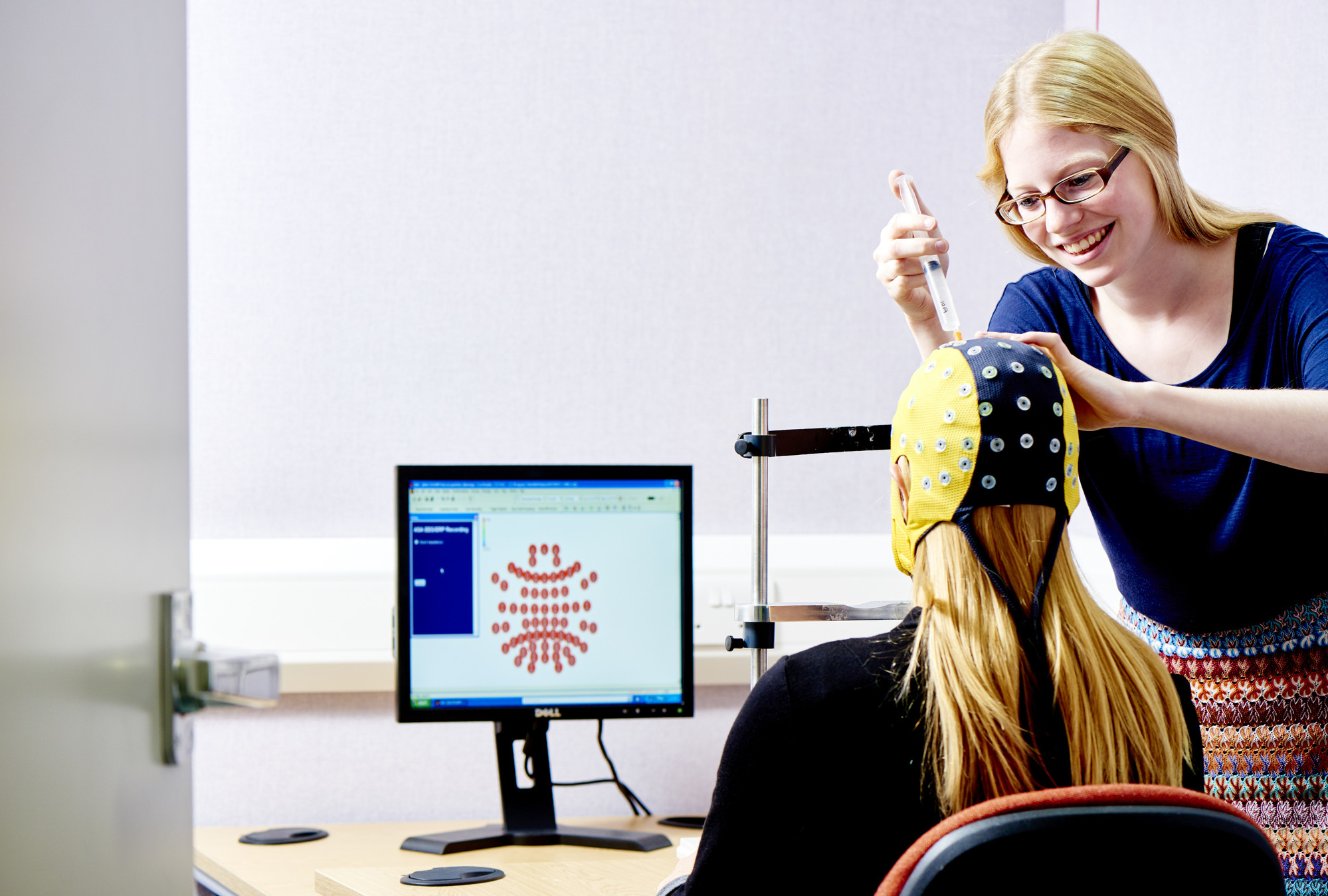
Since its inception in late 2001, the Wolfson Research Institute has housed one of the foremost UK centres for research in cognitive neuroscience, the Department of Psychology's Cognitive Neuroscience Research Unit (CNRU). Its objective is to study the psychological processes and brain systems underlying a range of human cognitive functions. The work involves the systematic behavioural and psychological study of both normal and brain-damaged volunteers, but in addition it takes advantage of such techniques as functional brain imaging (fMRI), transcranial magnetic stimulation (TMS), event-related potentials (ERPs) visuomotor performance, eye tracking, biophysiological recording. Where they lead to a convergence of outcomes, these different methodologies, in various combinations, allow progressively stronger conclusions to be reached about the brain processes underlying different aspects of human cognition.

Evaluation Research and Development Unit (ERDU)

The Evaluation, Research and Development Unit is an innovative partnership between Durham University and the local NHS to support world class commissioning with the research and development it will need to be successful. The Unit addresses themes relevant to the delivery of safe, clinically effective care, based on continuous improvement in their commissioning processes. Its role is to support evidence-based commissioning, including the improvement of care pathways and tackling health inequalities. ERDU works closely with commissioners and practitioners in identifying and addressing applied health research questions, supporting the translation of research findings into practice and evaluating the effectiveness of changes in service delivery. 

Medical Anthropology Research Group

The Medical Anthropology Research Group (MARG) is the only truly interdisciplinary research group of its kind, focusing on the anthropology of health. Our work bridges the fields of biological and social anthropology, community medicine, and public health. We work on both regional and international scale. Our aims are to advance the boundaries of a bioculturally-oriented medical anthropology, to critically debate local and international health issues, and to support research and outreach activities in matters of health. We support research students, encourage affiliations with health professionals, and make research relevant to policy. We host interdisciplinary workshops, promote new research collaborations, and direct both laboratory and community-based projects.

NIHR Research Design Service North East (external NIHR webpage) 

The Research Design Service is part of the infrastructure of the National Institute for Health Research (NIHR). The RDS NE is one of several regional services around the country making up the national RDS. The RDS provides help to investigators preparing research proposals for submission to national peer-reviewed funding competitions for applied health or social care research. Priority is given to those applying to NIHR funding bodies. It comprises a team of experienced researchers based in universities and the NHS across the North East, able to advise and provide methodological and practical advice when you are developing your grant application. As the RDS is funded by the NIHR for this purpose, this advice and support is provided free of charge.

Geographies of Health and Wellbeing (GoHWell)

GoHWell comprises of researchers in the Department of Geography concerned with the ways in which health and wellbeing may both constitute and result from inequalities in wealth, health, living conditions and life-chances. Professor Sarah Curtis is the cluster convener. Although all GoHWell researchers are based in the Department of Geography, many work within The Institute of Hazard, Risk and Resilience (Science Site, Durham), the Centre for Medical Humanities and/or the Wolfson Research Institute (Queens Campus, Stockton). The cluster is therefore very inter-disciplinary and cluster activities occur across both sites. Similarly, GoHWell staff deliver undergraduate and postgraduate modules on health and wellbeing across both campuses. The cluster has a lively external and internal research seminar series. These events take place at both campuses and are advertised open to academics, practitioners, and policymakers with an interest in GoHWell issues. The cluster also organises a Researcher Reading Group for postgraduate and postdoctoral researchers (convened by Joanne Cairns, Abi McNiven and Jayne Sellick). Administration of the GoHWell group is organised by Nicola Bramfitt.

The Centre for Social Justice and Community Action

The Centre for Social Justice and Community Action is a research centre at Durham University, made up of academic researchers from a number of departments and disciplines and community partners. Our aim is to promote and develop research, teaching, public/community engagement and staff development (both within and outside the university) around the broad theme of social justice in local and international settings, with a specific focus on participatory action research.