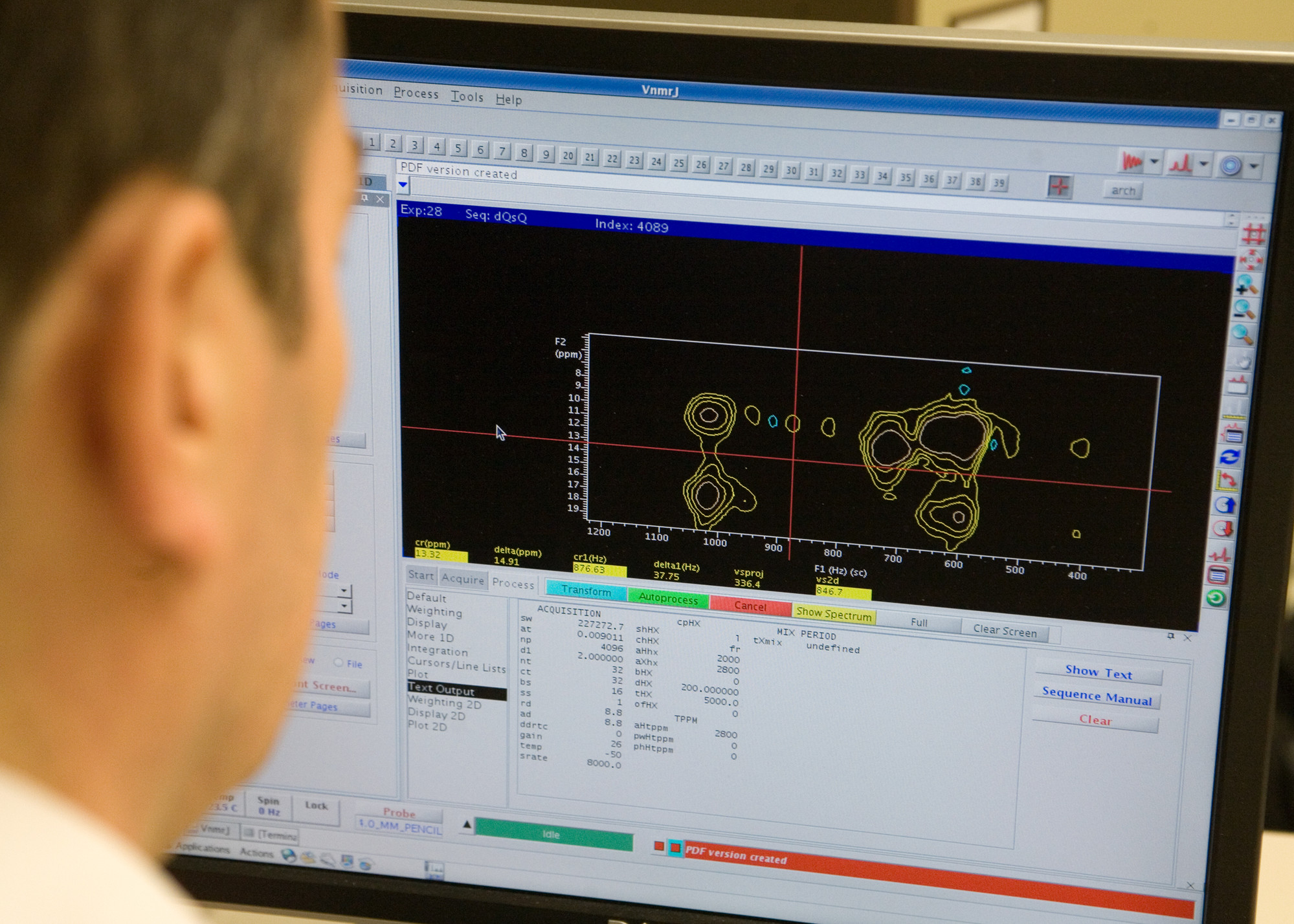
Our research combines the development of new techniques with applications to particular chemical problems. Our focus is bringing together methodological development and practical application, with a particular interest in combining solid-state NMR with complementary experimental techniques, such as X-ray Power Diffraction, and computational methods such as Density Functional Theory and Molecular Dynamics.
The equipment required to fully exploit the technique is specialised, and considerable expertise is required to use the technique effectively. The Durham Solid State NMR Research Service provides both access to state-of-the-art solid-state NMR instrumentation and expertise in providing its users with detailed and interpreted results.
Contact our team by email below to find out more about our work
c/o Prof. Paul Hodgkinson Department of Chemistry Durham University Stockton Road Durham DH1 3LE UK
Solid-State NMR Group: +44 (0)191 334 2019 Solid-State NMR Service: +44 (0)191 334 3925
Fax: +44 (0)191 384 4737 (Chemistry Department)