
Home

Jeremy M. Hutson, FRS
MA, DPhil (Oxon)
Professor of Chemistry and Physics
Office CG103K
Tel +44 (0)191 33 42147 (not in use during Covid pandemic)
Email [email protected]
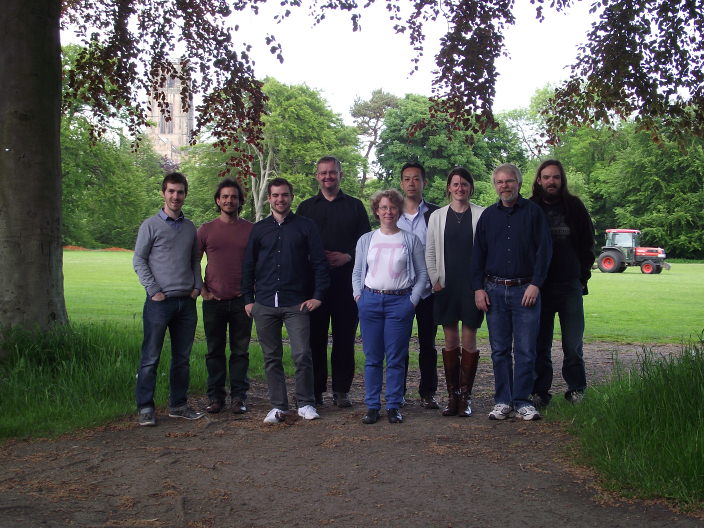
Jeremy Hutson is leader of the Cold Molecules Theory Research Group.
The group’s research interests are in the quantum mechanics and quantum dynamics of molecular interactions:
- Formation of ultracold molecules
- Properties of ultracold molecules
- Potential energy surfaces for ultracold collisions
- Control of ultracold collisions with electric, magnetic and microwave fields
- Use of ultracold molecules for quantum science
- Development of coherently controlled ultracold chemistry
Opportunities to join the research group
The group has no funding available for new post-doc positions at present. However, a document summarizing the group’s research interests, aimed at potential post-docs, is available here.
We have several grants from the UK Engineering and Physical Sciences Research Council (EPSRC), including a very large Programme Grant entitled “QSUM: Quantum Science with Ultracold Molecules” (2017-23). This is a joint experimental and theoretical project, together with colleagues in the Durham Physics Department (Simon Cornish), at Imperial College London (Michael Tarbutt and Ben Sauer), and at Oxford (Dieter Jaksch). Others include EPSRC grants on “Cooling Molecules To Quantum Degeneracy” with the same group at Imperial and on “Developing Molecular Quantum Technologies” to fund collaborations with cold-molecule groups at Harvard and Boulder.
The group takes Ph. D. students to work on the theory of cold and ultracold molecules. Funding can sometimes be found for outstanding students.
The group welcomes applications from well-qualified scientists to apply for personal Fellowships, including Durham International Fellowships, EPSRC Postdoctoral Fellowships, Newton International Fellowships and overseas government fellowships.
For German scientists, Jeremy Hutson’s Humboldt Research Award makes him eligible as a host for Feodor Lynen Research Fellowships.
Recent awards
Thomson Medal 2016 (Institute of Physics)
Tilden Prize 2011 (Royal Society of Chemistry)
Elected Fellow of the Royal Society 2010
Humboldt Research Award 2010 (Alexander von Humboldt Foundation)
Computational Chemistry Award 2007 (Royal Society of Chemistry)
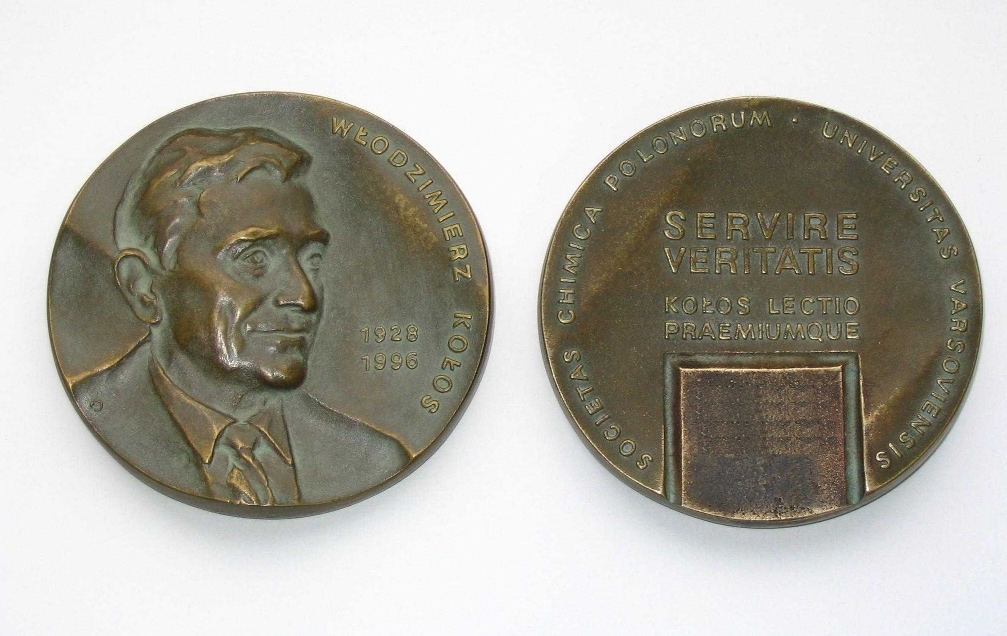
Kolos Medal 2007 (University of Warsaw and Polish Chemical Society)
International collaborations
Prof. Paul S. Julienne (NIST, Gaithersburg and JQI, University of Maryland):
Theory of molecule formation in ultracold atomic gases
Prof. Dr. Hanns-Christoph Naegerl and Prof. Dr. Rudolf Grimm (University of Innsbruck and Austrian Academy of Sciences):
Formation and properties of alkali metal dimers and Efimov Physics with Ultracold Atoms
Prof. Michael Tarbutt (Imperial College London):
Quantum Science with Ultracold Molecules and Cooling Molecules to Quantum Degeneracy
Editorships
Editor of International Reviews in Physical Chemistry (2000-)
Previously Specialist Editor of Computer Physics Communications
Previously served on the Editorial Boards of Molecular Physics and the Journal of Chemical Physics.
Conference Organisation
Chairman of the Organising Committee for Faraday Discussion 142, on Cold and Ultracold Molecules (Durham, 2009)
Chair (with Dan Neumark) of the Gordon Conference on Molecular and Ionic Clusters (Aussois, France, 2008).
Vice-Chair (with Dan Neumark) of the Gordon Conference on Molecular and Ionic Clusters (Ventura, California, 2006).
Organiser (with Roman Krems and John Doyle) of an ITAMP workshop on Ultracold Polar Molecules: production and properties (Harvard University, 2004)
Chairman of the Organising Committee for Faraday Discussion 118, on Cluster Dynamics (2001).
Organiser (with Anne McCoy) of a Telluride Summer Workshop on
Doped Rare Gas Clusters (2002)
and the first of a continuing series on
Spectroscopy and Dynamics on Multiple Surfaces (2003).
Founder of the series of CCP6 Workshops and Organiser of several of them, including
Interactions of Cold Atoms and Molecules (Durham, 2002);
Bose-Einstein Condensation: from atoms to molecules (Durham, 2004).
Computer Programs
MOLSCAT package for quantum-mechanical atomic and molecular inelastic scattering calculations.
BOUND program for calculating the vibration-rotation energy levels of weakly bound species such as Van der Waals complexes.
I-NoLLS, the Interactive Non-Linear Least-Squares package (with Mark Law).
Professional Organisations
C. Chem., FRSC and FInstP
Chair of the Scientific Committee of EuroQUAM, the European Science Foundation EUROCORES Programme on Cold Quantum Matter (2007-2010).
Committee member of the Molecular Physics Group of the Institute of Physics (2005-07)
Board member of the Division of Atomic and Molecular Physics of the European Physical Society (2004-06).
Chairman of CCP6, the EPSRC Collaborative Computational Project on Molecular Quantum Dynamics (1999-2005), and forerunner of CCPQ.
Mailing List
Founder and list owner of the molecular-dynamics-news email list, which distributes news for chemical physics research community. The list is run on the JISCmail Mailing List Service. For information on how to join the list, click here.
Hobbies
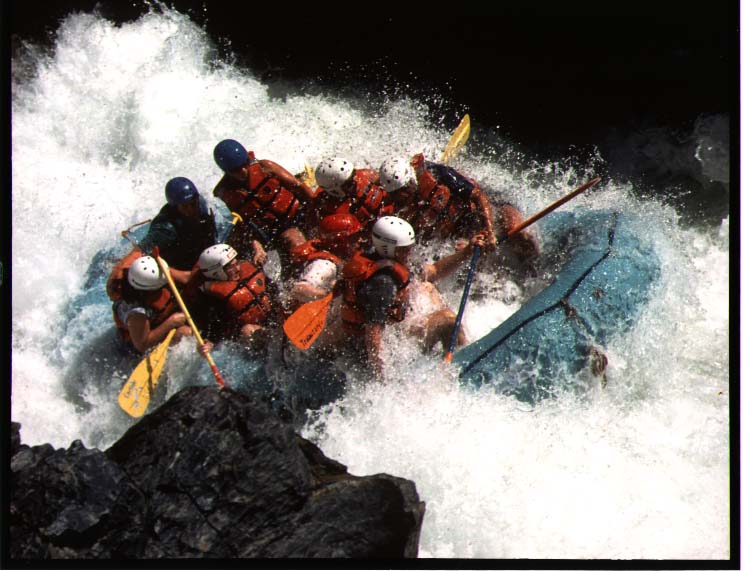
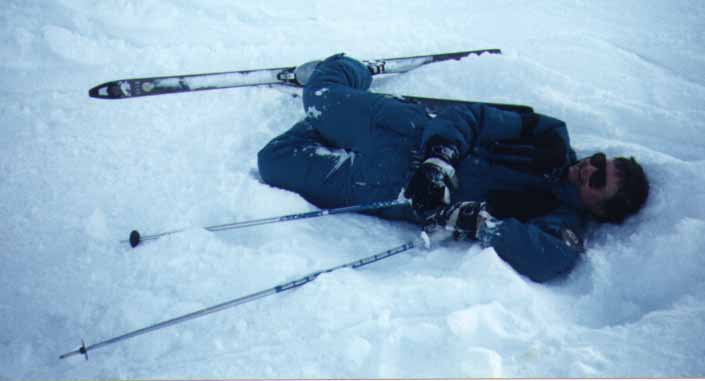
Jeremy’s hobbies have included white-water rafting (though he has been known to fall out of the raft), skiing (though he doesn’t always keep his feet there, either), and hill-walking (which is usually safer).

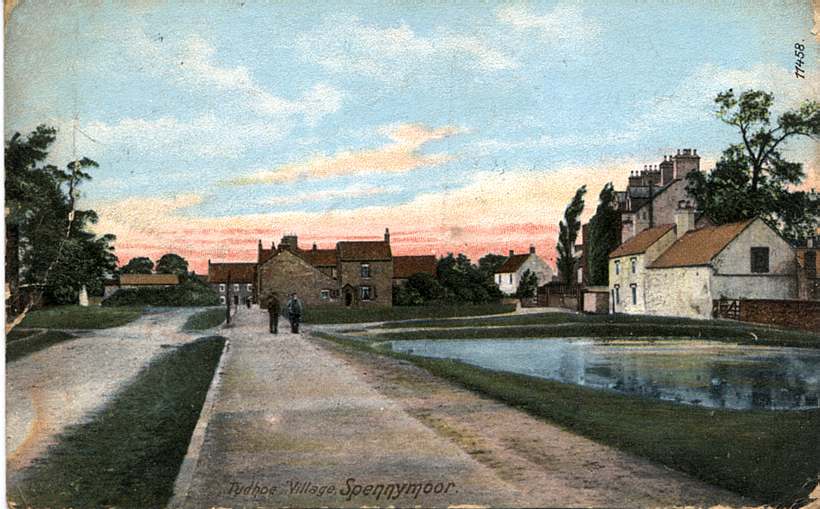
Jeremy is also interested in local history and vernacular architecture, and has written a History of Tudhoe Village in County Durham.