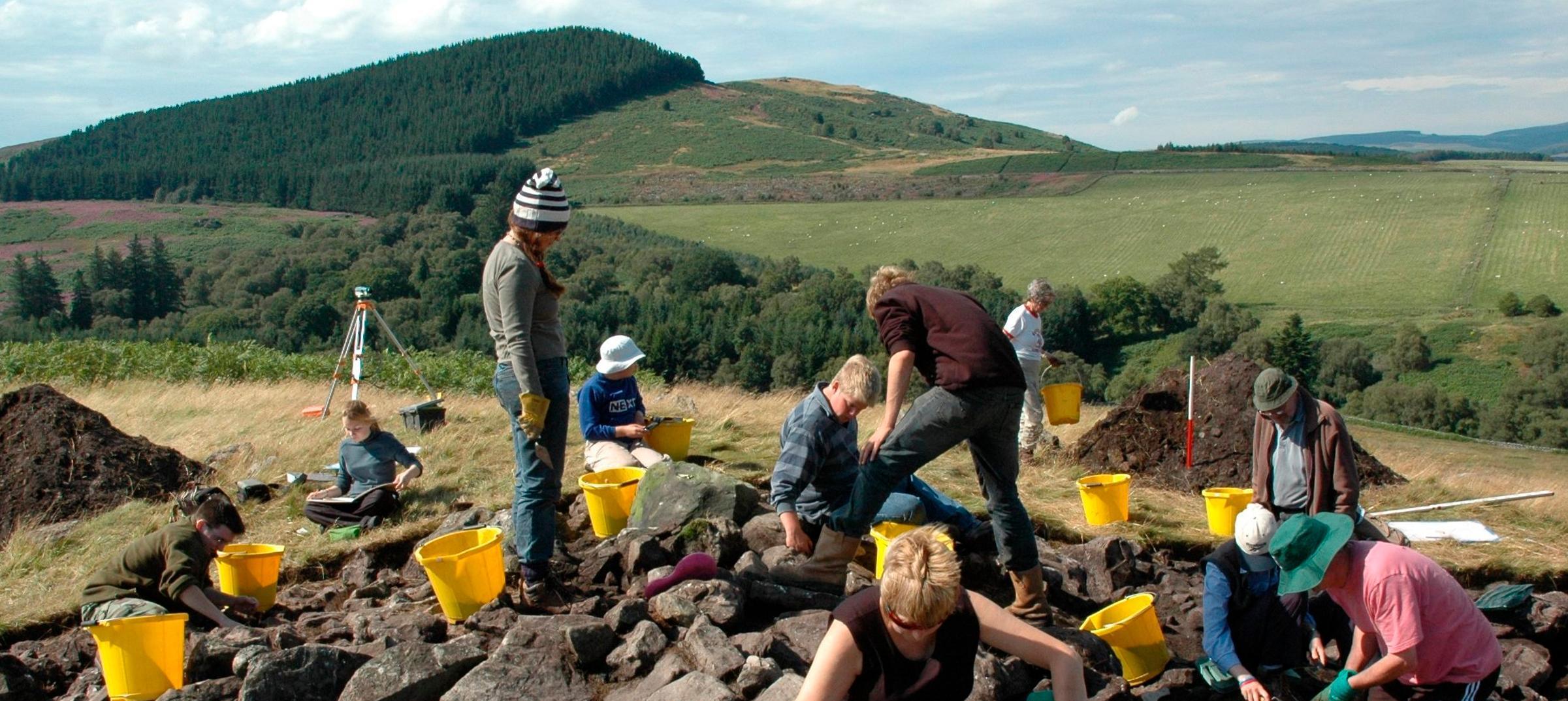
The Department of Archaeology is a leading centre for the study of archaeology and one of the top departments in the world. We are an inclusive, vibrant and international community, with expertise in a wide range of areas and important strengths in field and landscape archaeology, archaeological science, and museums and heritage studies.
We work across five continents, offering research and teaching specialisms in world prehistory, early complex societies, India, Egypt and the Near East, Roman and Classical archaeology, the archaeology of South Asia, Eurasia and the medieval, historical and contemporary worlds.
Our community is an exciting place in which to develop knowledge and gain essential and transferable skills, from lab-based training in osteology, isotopic analyses and aDNA to applied skills in field survey, excavation, Geographical Information Systems and remote sensing and the study of artefacts and collections.
During an archaeology degree you will learn about fieldwork, finds, historic buildings, scientific methods, archaeological theories, and computer techniques and how they all help us to understand the past.
Our postgraduate community is one of the largest in Europe. Our thriving group of taught and research postgraduate students actively contribute to the dynamic research environment we cultivate here at Durham.
Take a look at our courses, facilities, and opportunities, and hear from our staff and students in this video taster of Archaeology at Durham University.
This is how we make an impact on the world around us.
We offer a unique opportunity to write a new chapter in Durham University's proud history.
Durham University
We host and collaborate on a variety of events throughout the year. These include open days and public-facing activities where you can get a closer look at what our Department is all about!
Our competitive 'Research Dialogues' award also supports our PhD early career researchers in running workshops, seminars, discussion groups, lectures or research and impact activities. Click on the event cards to the right to learn more about this year's 'Research Dialogues' events!
This workshop is for all early career and established researchers who are interested in using micromorphology and phytolith analysis to investigate daily activities in ancient societies.
This interdisciplinary conference brings together leading scholars across history, archaeology, art history, and cultural studies, reflecting upon the genesis of their disciplines and motives of 19th century antiquarian and archaeological scholarship.
Contact us to find out more about the exciting things our students do, research breakthroughs, and life at the cutting edge of Archaeology.
Dept of ArchaeologyDurham UniversitySouth RoadDurhamDH1 3LE
Check out our list of FAQs or submit an enquiry form.
Order your personalised prospectus and College guide here.