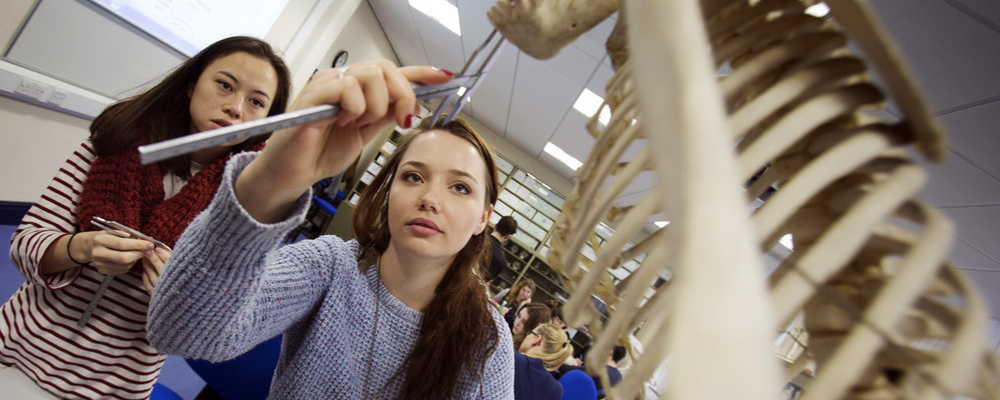
We are one of the largest Anthropology Departments in the UK and one of only a few to span Social Anthropology, Evolutionary Anthropology and Anthropology of Health. Our graduates have the opportunity to explore the full breadth of Anthropology or specialise in one of our sub-disciplinary areas. We are the only UK department to offer a residential field course (UK and international destinations) to all our undergraduate students.
QS World University Rankings by Subject 2024
We have been ranked 28th in the prestigious QS World University Rankings by Subject 2024.
The rankings, announced in March 2024 assessed over 19,100 subjects from almost 5,000 institutions across the world, based on academic and employer reputation, citations per academic paper, impact and quality of research and international research collaboration factors.
Durham is a world-leading university. Our academic excellence and impact is reflected in our global rankings and this is a true credit to the outstanding teaching and research carried out at our University.
Durham is consistently ranked as one of the world’s leading universities and among the top ten in the UK. It is ranked 78th in the QS World University Rankings 2024, 7th in the Guardian University Guide 2024 and Times and Sunday Times Good University Guide 2024.
Our undergraduate courses introduce you to the comparative and evolutionary study of humans and draw on a range of social, cultural and biological approaches.
Our taught Masters offer you the opportunity to pursue advanced specialist courses and ‘conversion’ from other degrees. If you’re a PhD applicant, the sheer number of staff here means you are likely to find someone who can supervise and nurture your research interests.
We’ve joined a pioneering new three-year pilot to monitor the UK’s hedgehogs and try to reverse the fall in their numbers.
We have launched a new Global Research Brochure where we shine a light on some of our incredible researchers who are making a difference in the world.
On 27th April 2022, students and staff participated in an exciting day of presentations and discussions at the Calman Learning Centre – the Postgraduate Conference, in what promised to be the department’s flagship event of the year.
Dr Ben Campbell from our Anthropology Department explores increasing concern about climate change and the melting of the Earth’s North and South Poles, but challenges us to consider the so-called Third Pole, the Himalaya-Karakoram mountains, and look beyond climate change as a matter of technical solutions to re-thinking our relationship with the planet.
Hear from our students in the Department of Anthropology and follow us on social media.
Durham University
Contact us to find out more about undergraduate and postgraduate opportunities in our Department.
Durham UniversityDawson BuildingSouth RoadDurham, DH1 3LE
Check out our list of FAQs or submit an enquiry form.
Order your personalised prospectus and College guide here.